
Grinding a Basement Slab Flat
Inside a Central New York basement: old tile glue and paint coming off down to clean, flat concrete, with the vacuum catching the dust at the head. Most of our metallic floors start exactly here.
SEAMLESS LIQUID-MARBLE ARTISTRY. Our Utica crew hand-pours custom 3D metallic marble floors for basements, home bars, and showrooms across Central NY—typically $7 to $17 per sq ft depending on finish. We diamond-grind your interior slab flat, seal it, and lock pearlescent veining under a stain-resistant topcoat.
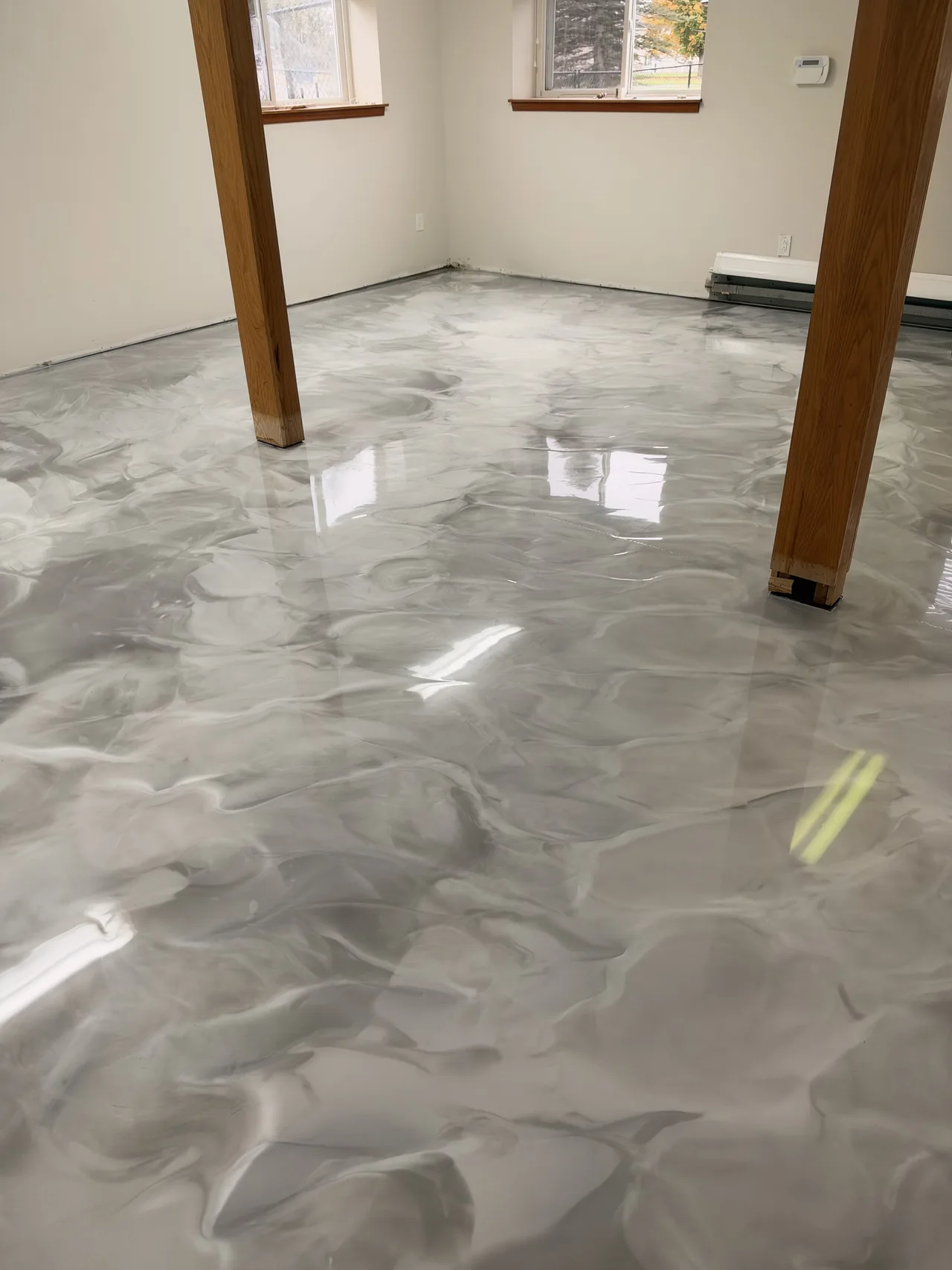

A metallic epoxy floor is poured, not printed. Pearlescent pigments are worked into the wet resin by hand, so the veining moves the way marble does and no two floors come out the same. Two of ours below, plus the same pour on a kitchen island to show how far the system goes.
Pearl, dove-gray and white pigments poured over a moisture-tested basement slab and detailed cleanly around the wood support columns.
Deep cobalt and silver swirled into one-of-a-kind veining under a glass-smooth clearcoat, the kind of floor a basement bar gets built around.
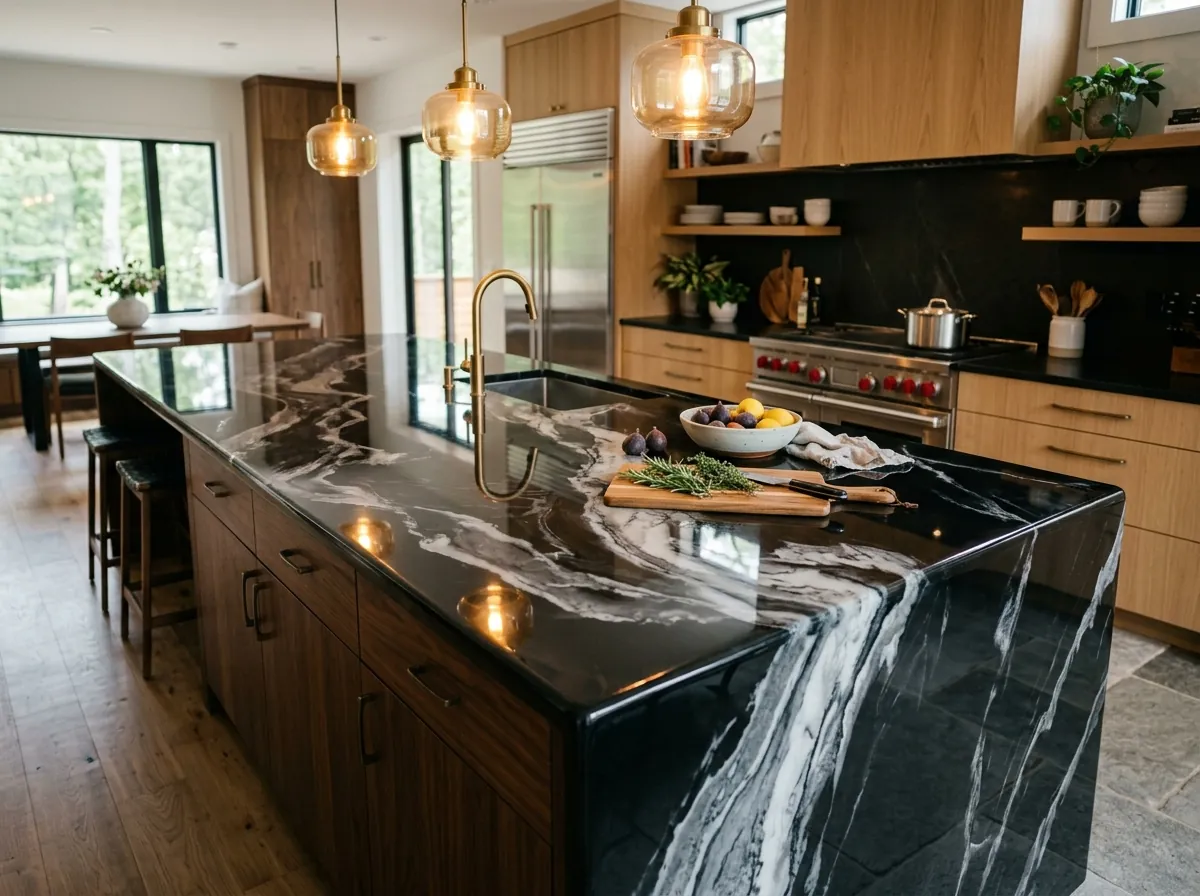
The same metallic marble system poured on a waterfall island. Floors and counters can be matched when a basement bar wants both.
Epoxy Countertops →The prep is the same as every floor we install: flat diamond grinding, a moisture reading, and a thick 100% solids epoxy build locked beneath a clear UV-stable topcoat. The difference is the pour day, when pearlescent color is moved by hand instead of broadcast.
A metallic floor is a mirror, so every ridge and trowel mark would show through it. Diamond grinders take the slab flat and open the pores, on HEPA vacuums indoors so the dust stays out of the house.
The slab is metered first; a moisture-blocking primer goes down if the reading calls for it. Then a solid-color basecoat in the floor's base tone seals the concrete and sets the background the metallics will move over.
Pearlescent pigments in clear epoxy are poured in ribbons and worked with rollers, brushes and a spray of solvent until the veining reads like stone. This is the hand-done part, and it is why no two floors match.
Once the metallic layer cures, a clear polyaspartic or urethane topcoat locks it under a stain-resistant, glass-smooth surface. Gloss is standard; a satin topcoat is available for rooms with a lot of window light.
Inside a Central New York basement: old tile glue and paint coming off down to clean, flat concrete, with the vacuum catching the dust at the head. Most of our metallic floors start exactly here.

What a sealed slab looks like before the pour: cracks filled flush and the basecoat laid down like glass. The metallic layer goes over this, which is why the floor underneath has to be flat.
Every residential and commercial floor installed by our local crew includes a 1-year craftsmanship warranty covering installation and workmanship. Commercial coating materials are backed by the manufacturer's product warranty against bond failure, peeling, and delamination.
Direct mechanical diamond preparation, crack restoration, and moisture-tested application completed by our in-house Central New York installation crew with zero outsourced subcontractors.
100% solid commercial epoxy basecoats and UV-stable polyaspartic clearcoats backed by the manufacturer's product warranty against bond failure, peeling, and hot-tire delamination.
Pick the room, how the concrete looks today, and your rough floor size. Our local crew will reach out within 2 hours to talk it through, review photos, or schedule an in-home visit to measure your floor and plan your color pour.
A marble look epoxy floor belongs where people sit, stand and look down. Four rooms we pour them in most.
The family room, the theater, the guest suite. A metallic epoxy basement floor turns the dampest slab in the house into the room's best feature, over the same moisture-tested prep as any basement floor.
Dark cobalt, charcoal and silver, or copper and bronze under the bar lights. Spilled drinks wipe off a sealed floor, and the counters can be poured to match.
A seamless, mop-clean floor that looks like stone for a fraction of the install time. Done on closed days, in sections if the space stays open, with the landlord's sign-off handled first.
Slab-on-grade homes and additions where the concrete is the subfloor. Warmer tones, satin or gloss, with the furniture back in place in a day.
A designer epoxy floor starts with two or three pigments, not a catalog. Silver and pearl over a white base reads like Carrara. Charcoal and pewter over black reads like slate under water. Cobalt and silver, copper and bronze, or a champagne gold pick up the room's lighting and furniture.
The veining is the second choice: tight and marbled, loose and flowing, or a mostly solid field with a few ribbons through it. We pour a sample board in your colors before the install so you see the combination in your own light, and we move the metallics on the day until you like how it reads.

Both floors go over the same ground, metered and sealed slab, and both wipe clean. The difference is what you want to look at and what the room has to put up with. Metallic is the showpiece. Flake is the work floor.
Honest trade-offs: a glossy metallic floor shows dust and fine scratches more than flake does, it is smooth rather than textured, and every pour is one of a kind, so a repair in one corner will be blended rather than matched. For a family room, a bar or a salon those are fine. For a laundry room, a workshop or anywhere wet boots come in, we steer you to flake.
Family rooms, home bars, theaters, salons, showrooms, living areas on a slab. Glass-smooth, one of a kind, mopped clean. Shows dust and fine scratches a little more.
Laundry rooms, gyms, storage, garages, shops and anywhere wet boots come in. Light texture for grip, speckle that hides dust, and a floor that takes tires and tools.
We get asked for a metallic epoxy garage floor often, and the honest answer is that it depends on what the garage does. A heated showroom garage, a collector bay or a detached space where the cars are the point takes a metallic floor well. It has the same epoxy base and polyaspartic clearcoat as a flake floor, so parked cars and dropped tools are not the issue.
The issue is grit. A daily-driver garage brings sand and road grit in on the tires every day, and on a glossy mirror finish that shows as fine scratching in the tire paths within a season. For that garage we recommend flake, which hides it. Tell us how the garage is used and we will tell you straight which floor it should get.
Heated, swept, and driven on a few times a month. The floor is part of the display and the cars arrive clean.
Two cars in and out every day, grit on the tires, bikes and bins along the walls. A flake floor hides what a mirror finish would show.
Straight answers to what Central New York homeowners and business owners ask before they book a marble-look floor.
From our Utica home base, our crew pours metallic epoxy floors across Central New York. Pick your area to start an estimate with your town already filled in.
Metallic basement floors, home bars, and salon floors across Utica, Rome, New Hartford, Whitesboro, Clinton, and Oneida County, including the Silver & Pearl family room above.
Get a Utica Metallic EstimateMarble-look floors for finished basements and showrooms across Carthage, Sackets Harbor, and the Fort Drum area.
Get a Watertown Metallic EstimateMetallic epoxy for lower levels, bars, and retail floors across Fulton, Pulaski, and nearby towns.
Get an Oswego Metallic EstimateDesigner floors for homes and camps through Ilion, Frankfort, Little Falls, and up into Old Forge.
Get a Herkimer Metallic EstimateMarble-look basement and living-area floors across Croghan, Lyons Falls, and surrounding towns.
Get a Lowville Metallic EstimateAnswer a few questions below and your request goes straight to our Utica crew—no call centers or lead brokers. We reach out within 2 hours to share a written price range, look over photos, or schedule an on-site visit with real flake samples.